

Patrick W. Corrigan (April 19, 1956 — January 11, 2026)
I first met Pat Corrigan on World Mental Health Day in 2011, at a national mental health stigma summit in Australia — a most appropriate day and setting for such an occasion.
The summit organizers had arranged for Pat to travel to Brisbane from Chicago to share his expert knowledge about stigma for delegates.
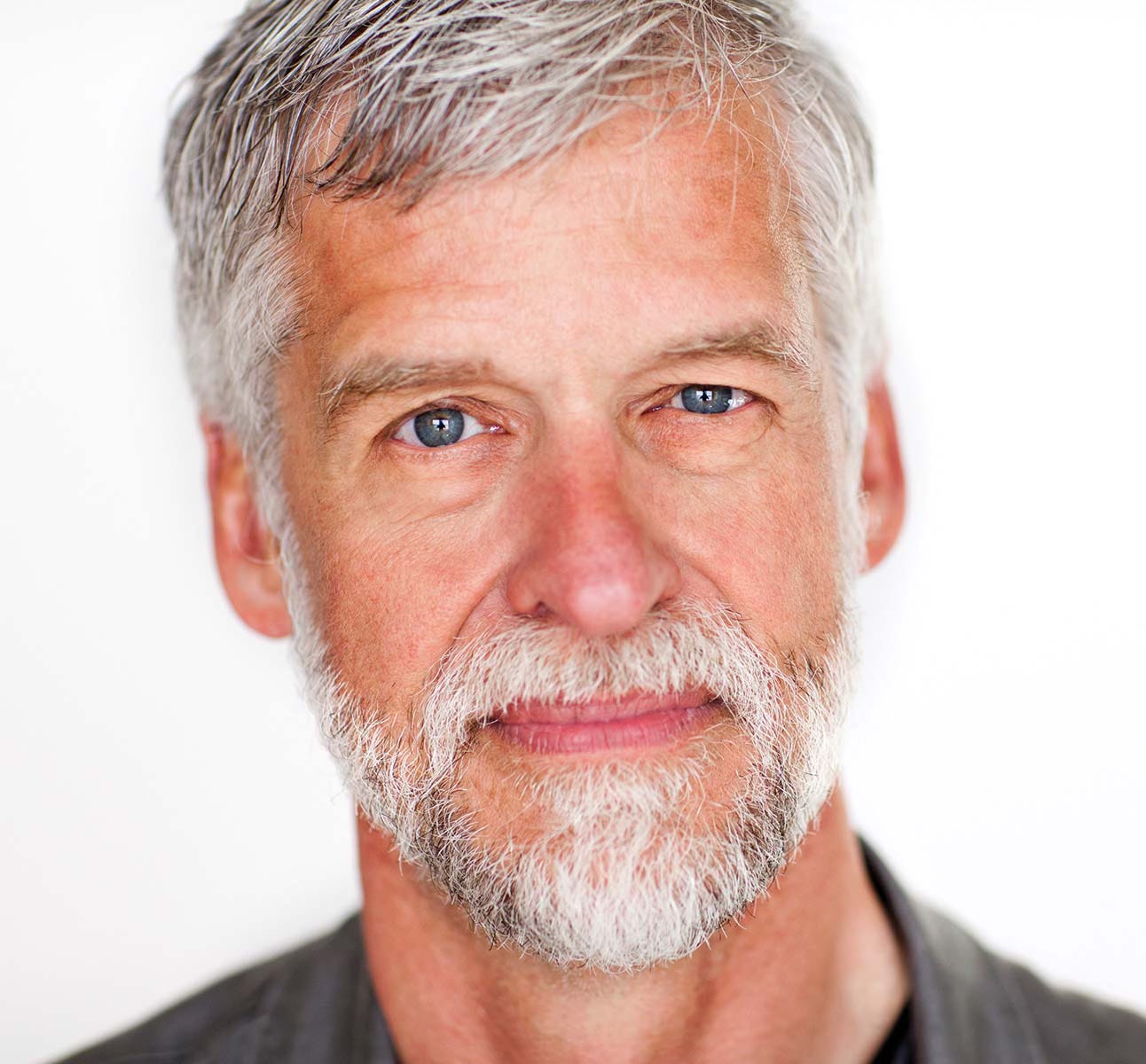
That night I had dinner with Pat and four others from the mental health sector, where I briefly shared some information about an initiative that I had launched earlier that day,1 as part of ‘Mentalympians’2 [a community development project I was trying to progress with the objective of reducing stigma and supporting recovery; its concept inspired by research done by Pat, some of his colleagues, and Albert Bandura, combined with my own personal experience]. Professor Kathy Griffiths suggested that I share my story with Pat, which I did.
That is how I ended up participating in a couple of Pat’s initiatives, including writing a chapter (Changing My Mind) in Coming Out Proud to Erase the Stigma of Mental Illness, participating with Pat and Ingrid Ozols in a symposium at a mental health services conference, and being involved on the peripheral to the Honest, Open, Proud program over the years.
Pat became a friend, mentor and akin to my ‘stigma spiritual leader’. He always amazed me with the speed he replied to my emails, given both the extensive demands of his work and the major time zone difference between Canberra and Chicago. The time in Chicago of some replies left me puzzled, wondering when he actually stopped working, and how much sleep he truly required.
Early on the morning of January 14th, I learned that Pat had passed away, notified by an email sent to his contact list by one of his colleagues at the Illinois Institute of Technology, Associate Professor Lindsay Sheehan — with details about his memorial service, as well as some information about his professional roles and academic accomplishments.
It is with deep sadness that I share the passing of Pat Corrigan, Distinguished Professor of Psychology, Director of the Center for Health Equity, Education, and Research and core faculty member in the Division of Counseling and Rehabilitation Science at Illinois Tech. Pat loved to spend time with his family and share family stories. Pat was a humorous and masterful storyteller and always had time to connect and laugh with others.
Pat joined the university in 2005 as a Professor in the Department of Psychology. For 4 decades, Pat was a nationally and internationally eminent scholar in psychiatric disability, stigma, recovery, and mental health equity. Pat authored over 500 peer-reviewed publications with an h-index exceeding 145 and more than 100,000 citations, placing him among the most highly cited scholars worldwide. Pat’s research fundamentally shaped how stigma is conceptualized, measured, and reduced within mental health, healthcare, criminal justice, and community settings. Pat’s externally funded portfolio included NIH, NIMH, NIDA, SAMHSA, PCORI, CDC, the U.S. Department of Education, international ministries, and major foundations, leading to landmark contributions in self-stigma, disclosure, peer navigation, recovery-oriented care, and community-based participatory research.
Pat’s honors and awards included, but not limited to: 1) American Psychological Association Award for Distinguished Contribution to Psychology in the Public Interest (Senior Career); 2) President’s Medal, Royal College of Psychiatrists; 3) Alexander Gralnick Research Investigator Prize (American Psychological Foundation); 4) BF Skinner Lecture Award; 5) Sigma Xi Senior Faculty Award; 6) Stanford/Elsevier Top 2% Most-Cited Scientists (2023); and 7) multiple humanitarian, innovation, and international research honors.
Fortunately, nobody else was in the office when I read, and re-read, the email in a state of shock, disbelief and sadness that Pat had passed away, having heard from him by email only two days before Christmas in reply to my correspondence.
Following is some of the information that was subsequently shared in his obituary.
Pat was the world expert on stigma in mental health. The United States Congress, the White House, and the Joint Chiefs of Staff, and dozens of universities called on him to provide his expertise. Stanford University lists him in the top 2% most cited scientists in the world. His work helped thousands of seriously mentally ill individuals receive better and more effective healthcare. Pat served the poor and suffering in a way few individuals ever will.
Pat’s research on stigma, and his generous support and encouragement, has made me a more effective mental health professional, advocate and activist. Moreover, he was also a brilliant role model. All in all, it is fair to say that he helped make me a better person.
In fact, Pat helped me before I met him at the stigma summit. His research on stigma motivated me while I was a rookie mental health advocate in Canberra, and still in the process of rebuilding a satisfying life after a life-altering episode of acute psychosis in Toronto years before.
While studying social work at the Australian Catholic University (ACU) during 2005-2007, I came across Pat’s research, which helping me better understand the damaging effects that self-stigma had played in my own 10-year recovery process. The combination of my life experience, and Pat’s extensive research, served to focus my attention on stigma as a key target for me to focus my attention and time.
Plus, the work done by Pat and his colleagues provided me with an evidence-based ‘roadmap’, a guide to help me navigate practice in mental health recovery-oriented services towards the desired destination and why I go to work: better outcomes for people with mental health challenges.
One paper by Pat and colleagues, published by World Psychiatry in 2009 — Self-stigma and the “why try” effect: impact on life goals and evidence-based practice — should be read by people with mental health challenges and all clinicians. In fact, I am periodically employed by ACU as a guest lecturer for a workshop about mental health and share it with social work students every chance I get.
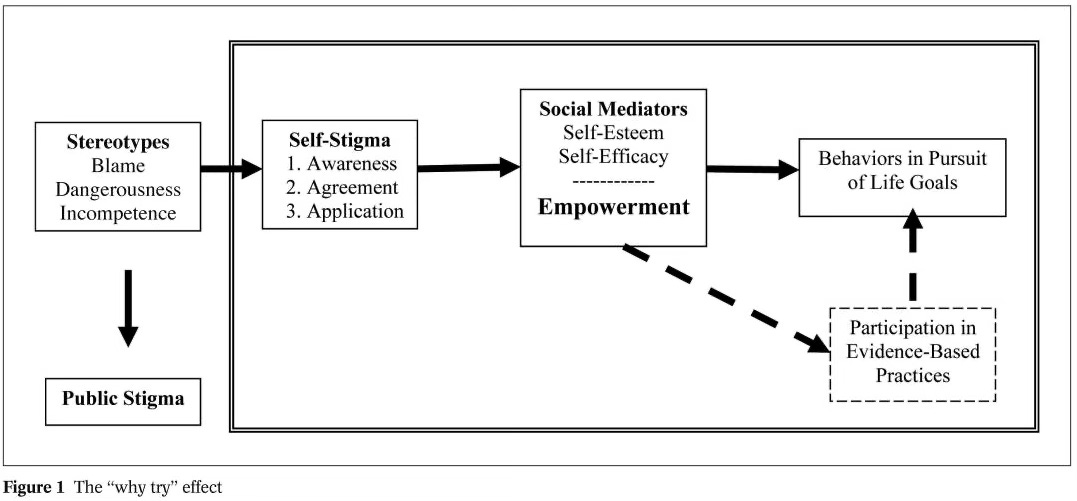
This knowledge about self-stigma and its negative effects on recovery has influenced my work in all of my different roles in mental health (volunteer, advocate, activist, peer worker, clinical manager, guest lecturer and working on a peer workforce initiative). However, it isn’t only his research into stigma that I’ve benefited from.
For example, the day before finding out that Pat had passed away, I was reviewing content from one of his books to quote about the theoretical base for the peer workforce, for future use in training for mental health clinicians.
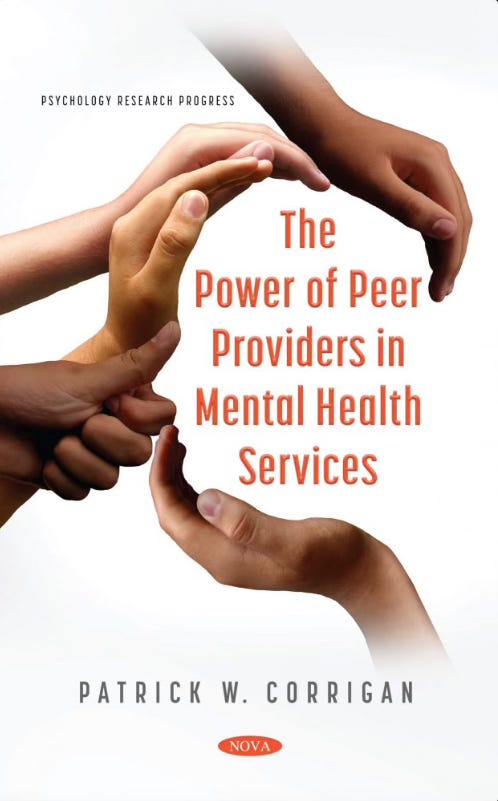
On a more personal note, I will always remember, and be guided by Pat’s belief in the power of personal stories to reduce stigma, while forever being grateful for his remarkable support of my independent advocacy and activism; especially one particularly notable case, which reportedly caused a degree of anxiety by others at the Illinois Institute of Technology, due to its political nature.
Shortly after Justin Trudeau became prime minister of Canada, I requested that he initiate an investigation into a case of systemic corruption in the country, a highly unorthodox scheme —and probably unlawful on multiple fronts — designed to unjustly enrich and subsidize private media companies — ‘the File 1000-121 affair’.
I am writing to draw your attention to the regulatory capture of the Canadian Radio-television and Telecommunications Commission (CRTC) and respectfully request that you initiate an investigation into corruption at the federal regulator … .
As background, I was employed in the Canadian broadcasting industry for my specialist knowledge of the cable television industry and its regulation by the CRTC when this scheme started.3
Days later, Pat sent an open letter to the Canadian prime minister addressing the importance of social role models to reduce stigma and promote mental health recovery, while stating that knowledge of my story was in the public interest.
If you choose to initiate an investigation into the company subsidy scheme as requested by Mr. Mahar, there inevitably will be media coverage of of his public interest to address this issue, including his personal experience of severe mental illness and recovery. Knowledge of Mr. Mahar’s story will serve to challenge the stigma of mental illness, raise awareness of recovery, and inspire hope for people with mental health problems and their families.4
Given my respect for Pat’s knowledge and wisdom, and his unique support, I feel a sense of responsibility to try to put my story of recovery from severe mental illness to good use, which comes with some risks.
For example, I experienced the negative effects of stigma, prejudice and discrimination when I was originally a whistleblower campaigning for an investigation into the file 1000-121 affair. At that time, the stigma of mental illness was effectively weaponized against me in a smear campaign by powerful vested interests that was reported in The Toronto Star5 and The Globe and Mail,6 as well as on Global Television.
As I was formerly diagnosed with bipolar disorder, Pat’s letter to Justin Trudeau provides me with a degree of protection, like a shield.
Furthermore, Pat was willing to lead by example in the fight against stigma, sharing his own person experience of mental illness in the public domain.
But I am also a person with serious mental illness. And those credentials have given me the greatest wisdom and authority in challenging stigma. I have been diagnosed with bipolar disorder, major depression, and generalized anxiety disorder for more than 40 years. I have been under a doctor’s care for decades and took my psych meds this morning. I have been hospitalized for my mental illness and know the shame it entails. I remember calling my wife, Georgeen, from the single wall phone on the unit and telling her that I would miss my daughter Liz’s school function that night because I was on a locked ward.
HOP against Stigma
Pat was in Canberra in 2015 for a mental health services conference, where he, Ingrid and I conducted the symposium ‘On Coming Out Proud to erase the stigma of mental illness’ about the program now known as the Honest, Open, Proud program — HOP for short.
During his short trip, Pat jokingly informed us that although he had been to Australia a number of times for work, but had never seen a kangaroo. Consequently, I tried to remedy this shortfall, and drove Pat and Ingrid to a reserve close to my home in Canberra, where kangaroos can normally be spotted. Unfortunately, on that particular day, the marsupials let us down; not one single kangaroo was visible from our vantage point.
And Pat never saw a kangaroo hop in Australia.
After reminiscing with Ingrid about Pat, I thought of one way that I am going to honour Pat.
After all of his research, Pat determined that ‘contact’ was the best way to reduce stigma, as he addressed in a 2019 article in Psychology Today entitled ‘Contact Is the Best Way to Beat Stigma’.
The ultimate value of scholarship on stigma is ideas and practices that help society replace stigmatizing attitudes with affirming behaviors. Findings from my 20-year research program are clear: Contact with people in recovery has the greatest impact.
…
People who disclose their experiences with mental illness are living testimony to recovery and dignity. They tear down stigma at its roots.7
Each year, I am going to do at least one free talk called ‘HOP against Stigma’, explain its origin, Pat’s work, and share my own story of experiencing severe mental illness in Canada and recovery in Australia, while encouraging early help-seeking behaviour and providing some recommendations about supporting others going through difficult times.
I’ve already picked the location, date and location for the first HOP against Stigma talk: it is going to in Donald, Victoria, on April 19th.
It would have been Pat’s 70th birthday.
Keith Mahar (11 October 2011), ‘Innovation on World Mental Health Day’, PR Newswire.
Mental Health Council of Australia, Annual Report 2008-09, p. 32.
Letter to Prime Minister Justin Trudeau by Keith Mahar (17 February 2016). Copy is available on the CRTC public file: Power, Profiteering, Plutocracy and CRTC Decision File 1000-121 Attachment 4.
Letter to Prime Minister Justin Trudeau by Patrick W. Corrigan (22 February 2016). Copy is available on the CRTC public file: Power, Profiteering, Plutocracy and CRTC Decision File 1000-121 Attachment 19.
Antonia Zerbisia (9 July 1995) ‘Taking on a cable giant’, The Toronto Star, p. D1.
John Haslett Cuff (11 July 1995) ‘Challenger of CRTC no crank’, The Globe and Mail, p. C1.
Patrick W. Corrigan (18 June 2019) ‘Contact Is the Best Way to Beat Stigma’, Psychology Today.