

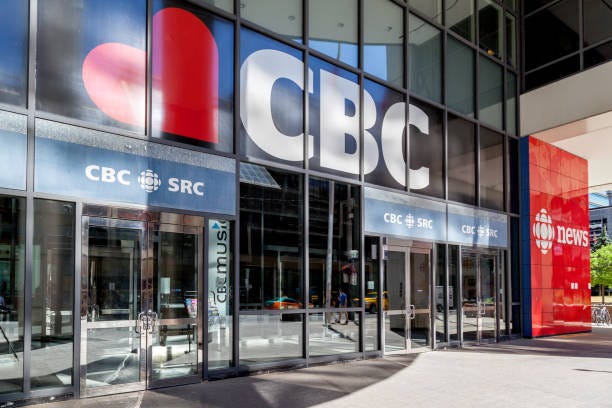
Sadly, it is evident that artificial intelligence (AI) is currently better than journalists at informing Canadians about the File 1000-121 Affair.
Earlier today I asked Grok — the AI available on the social media platform X — to tell me about the long-term case of systemic corruption involving officials at the Canadian Radio-television and Telecommunications Commission (CRTC) and media companies, which politicians have failed to address.
Following is the information provided by Grok a few seconds later.
Tell me about Keith Mahar and the File 1000-121 Affair
Keith Mahar is a Canadian-Australian social worker, mental health advocate, and activist known for his work challenging systemic issues in the Canadian broadcasting industry, particularly related to the Canadian Radio-television and Telecommunications Commission (CRTC). The "File 1000-121 Affair" refers to his long-standing campaign to expose alleged corruption and regulatory capture within the CRTC, specifically concerning a company subsidy scheme that he claims unjustly enriched private media companies at the expense of Canadian ratepayers and disadvantaged American companies.
Background on Keith Mahar
• Professional and Personal Profile: Mahar is a dual Australian-Canadian citizen with degrees in business administration and social work. He has worked in mental health services for over 15 years, initially as a peer worker and later as a clinical manager in adolescent mental health services. He is also a third-generation individual diagnosed with bipolar disorder and has been a prominent mental health advocate, speaking at conferences and serving on boards like Mental Illness Education ACT and the National Mental Health Committee for the Australian Association of Social Workers.
• Activism: Mahar’s activism began in the 1990s when he worked in the Canadian broadcasting industry. He became concerned about the CRTC’s regulation of the cable television industry, particularly a subsidy scheme that he alleges allowed private companies to profit unfairly.
The File 1000-121 Affair
The "File 1000-121 Affair" centers on Mahar’s allegations of systemic corruption and regulatory capture within the CRTC, specifically tied to an unpublished regulatory decision identified as File 1000-121, dated June 25, 1996. Below is a detailed overview based on available information:
• Origins of the Issue: In 1995, Mahar publicly challenged what he described as an "unjust corporate enrichment scheme" involving the CRTC and private media companies, notably one controlled by billionaire Ted Rogers. This led to questions being raised in the Canadian Parliament to then-Prime Minister Jean Chrétien. When political action stalled, Mahar initiated a legal proceeding, Mahar v. Rogers Cablesystems Ltd., which became a precedent-setting case for public interest litigation costs but did not fully resolve the issue due to Mahar’s health challenges.
• Allegations: Mahar claims the CRTC’s subsidy scheme, now embedded in the Canada Media Fund, has allowed private companies to receive hundreds of millions in subsidies (e.g., C$352 million in one program year) without sufficient transparency or public benefit. He argues this scheme disadvantages American companies in international markets and violates the financial and democratic rights of Canadians, who unknowingly subsidize these programs.
• File 1000-121: This refers to an unpublished CRTC decision that Mahar was unable to appeal due to experiencing acute psychosis and hospitalization in 1996. He contends that the decision and related subsidy scheme demonstrate regulatory capture, where the CRTC prioritizes corporate interests over public welfare. The lack of transparency around File 1000-121 has left open questions about whether the CRTC and cable companies acted unlawfully and if ratepayers were entitled to refunds.
• Continued Advocacy: Mahar’s efforts led to parliamentary debates in 1995 and 2008, with MP Libby Davies noting in 2008 that Canadians were owed over $1.2 billion due to the scheme. Despite requests to Prime Ministers Justin Trudeau and Stephen Harper for investigations, no public inquiry has been launched. In 2018, Mahar escalated the issue by submitting a report to the U.S. Trade Representative, alleging that Canada exploited the cultural industries exemption in NAFTA to the detriment of American workers.
• Impact and Recognition: Mahar’s story, including his mental health struggles during this activism, has been documented in media and publications like Coming Out Proud to Erase the Stigma of Mental Illness (2015). His work has been acknowledged by figures like former U.S. First Lady Rosalynn Carter and Australian Senator Carol Brown.
Challenges and Context
• Personal Struggles: Mahar’s advocacy was interrupted by severe mental health challenges, including psychosis and bipolar disorder, which halted his ability to appeal the CRTC’s 1996 decision. His recovery in Australia and subsequent mental health advocacy have been integral to his public persona.
• Systemic Issues: Mahar’s campaign highlights broader concerns about regulatory capture, corporate influence in government, and lack of accountability in media regulation. He continues to push for a public inquiry into the CRTC, believing it could have implications for understanding government-corporate relationships and media integrity in Canada.
• Limited Resolution: The "File 1000-121 Affair" remains unresolved, with no definitive public inquiry or legal ruling confirming Mahar’s allegations. The unpublished nature of the CRTC decision and lack of governmental response have kept the issue in limbo.
Clarification on Other Keith Mahars
There are individuals named Keith Mahar involved in unrelated contexts, which should not be confused with the Canadian-Australian activist:
• A Keith Mahar in the U.S. is linked to a legal case (Keith v. Mahar, 5:24-cv-01391) involving allegations against police officers, including a Colin Mahar, for civil rights violations. This is unrelated to the CRTC issue.
• Another Keith Mahar, associated with mental health advocacy, is distinct from a Charlie Mahar, a former sheriff candidate in Michigan disciplined for an extramarital affair.
Conclusion
Keith Mahar’s "File 1000-121 Affair" is a complex saga of activism against alleged corruption in Canada’s broadcasting regulation, marked by his persistent efforts despite personal and systemic challenges. His work has sparked parliamentary debate and international attention but has not yet achieved the public inquiry he seeks. For further details, Mahar’s submission to the U.S. Trade Representative is available at www.onemedialaw.com, and his LinkedIn profile provides additional context on his advocacy.
If you need more specific details or want me to dig deeper into any aspect, let me know!
The information provided by Grok included some errors, including:
The unpublished regulatory decision is not identified as File 1000-121. File 1000-121 was opened by the CRTC in response to a complaint filed by Cable Watch Citizens’ Association alleging unlawful activities by the Commission and cable-TV companies. The unpublished CRTC decision was made in relation to those allegations, which is why I have referred to it as the unpublished CRTC File 1000-121 decision.
My health challenges prevented me from requesting the Federal Court of Appeal to review the unpublished CRTC File 1000-121 decision in 1996, it did not impact the legal case Mahar v. Rogers Cablesystems Ltd. which was in 1995.
The subsidy scheme that I have addressed over the years did not equal C$352 million in one year, as this amount of funding to the Canada Media Fund includes taxpayer money as well.
Australian Senator Carol Brown acknowledged my work related to a resource for tertiary students with mental health conditions, and the late U.S. First Lady Rosalynn Carter did not acknowledge me personally, but the contributors of a book related to mental health that I authored one chapter.
The website noted by Grok (onemedialaw.com) is currently offline and being updated.
Although Grok made these errors, it is clear that AI is learning from the information that I have recently placed in the public domain respecting this case of systemic corruption, as the same AI had absolutely no idea about the File 1000-121 Affair in May (Artificial Intelligence’s Knowledge Today About The File 1000-121: A Big Zero).
By comparison, Canadian journalists appear to know less about the case than they did years ago, or they are simply unwilling to inform citizens about the serious governance issue.
The last articles related to the File 1000-121 Affair in mainstream Canadian media that I am aware of were by Antonia Zerbisias on February 6, 2007 (TV fund money really belongs to us) and February 16, 2007 (Your money funded CTF).
In fact, the last article related to the File 1000-121 Affair that I am aware of actually appeared in an American publication— The Hollywood Reporter — on September 9th, 2018 (Canada Won’t Deal on Media in NAFTA, Says Justin Trudeau).
However, I have contacted a number of Canadian journalists over the years about the evidence of regulatory capture and systemic corruption at the CRTC.
In fact, I provided information and documents about the case of systemic corruption on June 22nd by email directly to Brodie Fenlon, the general manager and editor in chief of news at the Canadian Broadcasting Corporation (CBC), and requested a conversation.
Dear Mr. Fenlon,
I am writing this open letter to request a telephone conversation.
Yesterday, I wrote a short article on Substack about the failure of the CBC to inform Canadians about a case of long-term systemic corruption at the Canadian Radio-television and Telecommunications Commission (CRTC) — the File 1000-121 Affair — https://keithmahar.substack.com/.
As documented on www.onemedialaw.com, I notified Justin Trudeau about the File 1000-121 Affair in 2016 and requested that he initiate an investigation.
Instead of investigating the matter, however, the Trudeau government actually expanded the statutory authority of the federal regulator by enacting the Online Streaming Act.
I've decided that it is the right time to again actively address this serious governance issue in the public domain, and to also provide the CBC with one more opportunity to inform Canadians about the File 1000-121 Affair, in the public interest.
Attached is video footage of the questions that I previously generated in Parliament about the File 1000-121 Affair in 1995 and 2008, as well as video footage of the last time that the CRTC permitted me to appear at one of its public hearings.
For a quick summary about my background, simply ask AI: "Tell me about Keith Mahar".
In addition, attached is a copy of 'One Media Law: A case study of regulatory capture, systemic corruption and the Canadian Radio-television and Telecommunications Commission'.
Please confirm if it is possible to schedule a time for a conversation about this matter.
Regards,
Keith Mahar1
The subject line of the email to Mr. Fenlon was “Failure of CBC to address the File 1000-121 Affair for Canadians”, which was sent following my related post (Costly Failure By Canada’s Public Broadcaster).
It has been over two months since my request and he is yet to respond.
At this stage, AI is the winner of this contest, and Canadians continue to be the losers.
Given the difference in time zones between Canberra and Toronto, the email and material was delivered to the attention on the CBC executive on June 21, 2025.